
Life Skills
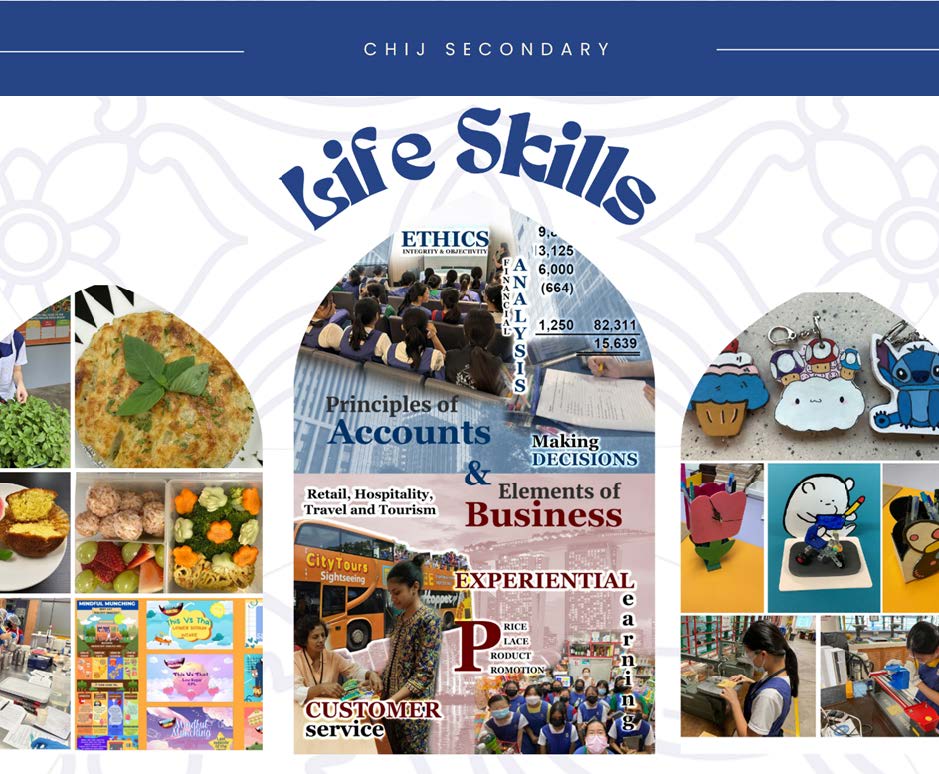
Life Skills curriculum, covering Design & Technology, Food & Consumer Education, Business Skills, and Accounts. Students gain practical skills to make informed decisions and grow into well-rounded individuals.
Building Skills for the Future
Student Outcomes
We envision our Food & Consumer Education (FCE) students to:
Make informed and responsible food choices that support health, well-being and positive values.
Develop essential life skills such as planning, problem-solving and decision-making through authentic food contexts.
Apply critical and creative thinking to understand nutrition, food science and consumer-related issues.
Demonstrate care and responsibility for self, others and the environment through safe and sustainable practices.
Build confidence and independence for everyday living and lifelong learning.
We envision our Design & Technology (D&T) students to:
Develop an awareness of design and technology in the real world.
Appreciate the relationship between function, aesthetics and technology in design.
Develop basic design thinking and communication skills.
Experience the design process through making, testing and improving prototypes.
Think creatively and critically to become confident and autonomous decision-makers.
We envision our Principles of Accounts (PoA) students to:
Understand the purpose of accounting, key financial statements and basic business structures.
Apply double-entry principles to record, process and present accurate accounting information.
Interpret financial statements and simple ratios to analyse business performance and support decisions.
Use both accounting and non-accounting information to make and justify responsible business decisions.
Demonstrate integrity, objectivity, care and precision when handling and communicating financial information.
Think critically and adaptively about real-world business issues, including global and technological developments affecting accounting.
We envision our Elements of Business Skills (EBS) students to:
Understand basic business activities in Singapore’s Travel and Tourism, Hospitality and Retail industries, including their roles, trends, competition and related careers.
Grasp core concepts of basic marketing (needs and wants, target market, marketing mix) and customer relations (effective communication and quality customer service).
Apply marketing and customer service concepts to real business contexts, using appropriate business terminology.
Gather, select, interpret, analyse and evaluate information in a business investigation to make reasoned recommendations that improve a business’s marketing mix and customer experience.
Hone decision-making skills, select appropriate digital tools and strengthen communication skills in working independently and collaboratively in authentic industry-based tasks.
Demonstrate integrity, responsibility, respect and social awareness when dealing with others, and show an enterprising mindset, resilience and passion for lifelong learning.
Curriculum
At CHIJ Secondary, the Life Skills curriculum equips students with practical knowledge, values and competencies for everyday living. Through the subjects of Food & Consumer Education (FCE), Design & Technology (D&T), Elements of Business Skills (EBS), and Principles of Accounts (POA), students develop essential skills such as responsible decision-making, financial literacy, creative problem-solving and consumer awareness.
Learning is anchored in authentic, hands-on experiences that connect classroom concepts with real-world applications. Through applied learning projects, collaborative tasks and industry exposure, students develop critical thinking, adaptability and resilience.
Food & Consumer Education (FCE)
The Lower Secondary Food & Consumer Education (FCE) programme equips students with essential life skills in food literacy, nutrition and responsible consumer decision-making. Through hands-on learning in the Food Lab, students develop confidence in basic culinary techniques while learning about balanced diets, food safety and hygiene.
Learning extends beyond recipes as students practise planning, preparing and evaluating meals while working collaboratively with their peers. Creativity, teamwork and critical thinking are integrated into every learning experience.
Nutrition & Food Science (NFS)
Based on the Upper Secondary Nutrition & Food Science (NFS) syllabus, CHIJ Secondary customises its curriculum to provide students with enriched and authentic learning experiences. Through inquiry-based activities and exploratory studies, students analyse food properties, evaluate sensory qualities and draw conclusions about food preparation outcomes. These experiences build a strong foundation in food science, nutrition and culinary skills while strengthening critical thinking and practical application.
Learning is further enriched through learning journeys to polytechnics, where students are introduced to advanced sensory evaluation using specialised analysis tools. These experiences provide insights into how food quality, taste and texture are assessed in the food industry.
Students also participate in workshops at baking and culinary schools, refining their practical skills and creativity. Opportunities to take part in culinary competitions allow students to showcase their talents, apply their knowledge in authentic contexts and gain exposure to professional industry standards.
Design & Technology (D&T)
The two-year Lower Secondary Design & Technology (D&T) curriculum introduces students to design thinking, creativity and problem-solving through making. Through hands-on projects, students learn to identify real-world needs, generate ideas and develop practical design solutions.
In Secondary 1 – Design Discovery - students explore how design shapes everyday products. Through practical workshop skills such as sawing, filing, drilling and polishing, they gain confidence working with materials like wood and acrylic. Students design and make products including acrylic handphone holders, wooden bag tags and luggage tags, and explore simple STEM projects using 3D pens and LED stickers, strengthening their creativity and technical skills.
In Secondary 2 – Design Community - students apply the Design Thinking Process to create products inspired by themes such as Home, Multiracial Singapore. By integrating simple electronic circuits into their wooden and acrylic designs, students develop innovation, problem-solving skills and confidence in bringing ideas to life.
Elements of Business Skills (EBS)
The Elements of Business Skills (EBS) curriculum introduces students to the industries of travel and tourism, hospitality and retail, helping them understand how businesses meet customer needs through effective marketing and service.
Learning is enriched through the Applied Learning Programme (ALP), where students participate in learning journeys to organisations such as the Big Bus Tour (Hippo Hop-on Hop-off) and other business establishments. These experiences allow students to observe customer engagement and business operations in authentic settings.
Students also take part in the annual 20-hour Applied Learning Module (ALM) Workshop, which immerses them in hospitality and service-learning activities. The programme culminates in a school-wide showcase, where students present creative business ideas through service stations and service demonstrations.
Through these experiences, students develop communication, collaboration and entrepreneurial thinking.
Principles of Accounts (POA)
The Principles of Accounts (POA) curriculum develops students’ financial literacy, analytical reasoning and ethical decision-making skills. Students learn to record, present and interpret financial information to support sound decision-making in both personal and business contexts.
A key feature of the programme is the school’s 3-Year Tiered Financial Literacy Programme, which develops foundational money management skills from Secondary One to Three before students advance to deeper financial analysis in POA.
Students also apply their learning in authentic contexts through competitions such as the National Financial Literacy Competition and The businesSPlan by Singapore Polytechnic.
Through applied learning experiences that simulate real business environments, students develop precision, critical thinking and ethical awareness while building confidence in managing financial information responsibly.
Signature Programmes
Farm-to-Table: Our Signature Sustainability Programme
Growing responsible consumers and environmentally conscious students
Programme Highlights
Students grow, harvest and cook with produce from the school garden
Hands-on learning in food waste reduction and creative upcycling
Application of My Healthy Plate principles through meal preparation
Learning journeys to sustainable and urban farms
Sustainability is a cornerstone of the Food & Consumer Education (FCE) programme at IJ. Through our signature Farm-to-Table initiative, developed in collaboration with the iGrow CCA, students experience the journey of food from garden to plate while developing a deeper appreciation for responsible consumption.
Students engage in authentic, hands-on learning as they plant and harvest produce from the school garden before incorporating these fresh ingredients into their dishes. They also explore creative ways to use the produce as garnishes and decorations, discovering how thoughtful food choices support both health and sustainability.
Importantly, students also practise sustainable habits such as reducing food waste by using “ugly” produce and upcycling everyday materials. Learning journeys to sustainable and urban farms further enrich their understanding of real-world sustainable food production.
Through these experiences, the FCE and Nutrition & Food Science (NFS) programmes nurture environmentally responsible learners who demonstrate creativity, stewardship and care for the community.
FinLit@IJ: Our Signature Financial Literacy Programme
Equipping students with the knowledge and discipline to make wise financial decisions for life.
Programme Highlights
Progressive 3-year financial literacy programme for Sec 1–3
Real-life simulations such as budgeting and online shopping activities
Exploration of savings, debt, risk management and investments
Participation in the National Financial Literacy Competition
The FinLit@IJ 3-Year Tiered Financial Literacy Programme is a distinctive whole-school initiative designed to progressively build strong financial literacy among Secondary 1 to 3 students. The programme complements the POA curriculum while supporting the LifeSkills Department’s vision of nurturing informed and responsible decision-makers.
Through interdisciplinary learning linked to Food and Consumer Education (FCE), students explore concepts such as needs versus wants, reading price labels and making thoughtful financial choices. These connections strengthen responsible consumption habits while nurturing them to manage resources with integrity and purpose.
Students participate in engaging learning experiences tailored to each level.
Secondary 1 students explore the value of money and savings through interactive activities such as “Name the Price” and “Spend or Thrift”.
Secondary 2 students learn about compound interest, credit cards, debt and inflation through scenario-based games.
Secondary 3, students explore financial ratios, risk management and basic investments such as equities and ETFs through simulations and reflective activities.
Through these experiences, students develop financial discipline, integrity and stewardship as they strike a balance between their choices and aspirations.
Applied Learning in Business: EBS Signature Programme
Experiencing retail, tourism and hospitality through authentic industry learning.
Programme Highlights
20-hour Applied Learning Module (ALM) with hands-on industry exposure
Learning journeys including factory tours and branding talks
Hospitality skills practice such as table-setting, service and mocktail demonstrations
Big Bus Tour alternative assessment exploring Singapore’s tourism landscape
The 20-hour Applied Learning Module (ALM) Workshop and Big Bus Tour are signature programmes within the Elements of Business Skills (EBS) curriculum. Aligned with MOE’s EBS syllabus outcomes and the LifeSkills Department’s vision of nurturing informed decision-makers, these programmes transform classroom learning into authentic industry experiences while offering opportunities to demonstrate service excellence and entrepreneurial thinking.
During the four-day ALM Workshop, students engage in career exploration and learn the 5A customer service model (Acknowledge, Ask, Assist, Act, Appreciate) through various interactive role-play and business simulations. They also gain insight into business operations through factory tours and branding talks, and practise hospitality skills through table-setting, service demonstrations and mocktail preparation. The workshop culminates in a school-wide showcase, where students present service stations and demonstrate service skills, with awards such as Best Service Team recognising outstanding performance.
Complementing the workshop, the Big Bus Tour alternative assessment allows students to observe and analyse Singapore’s tourism landscape. Through these authentic experiences, students develop communication, empathy, collaboration and business acumen while building confidence for future career pathways.
Our Students
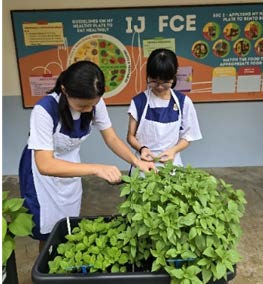
Farm to Table : Students harvesting fresh herbs from the garden
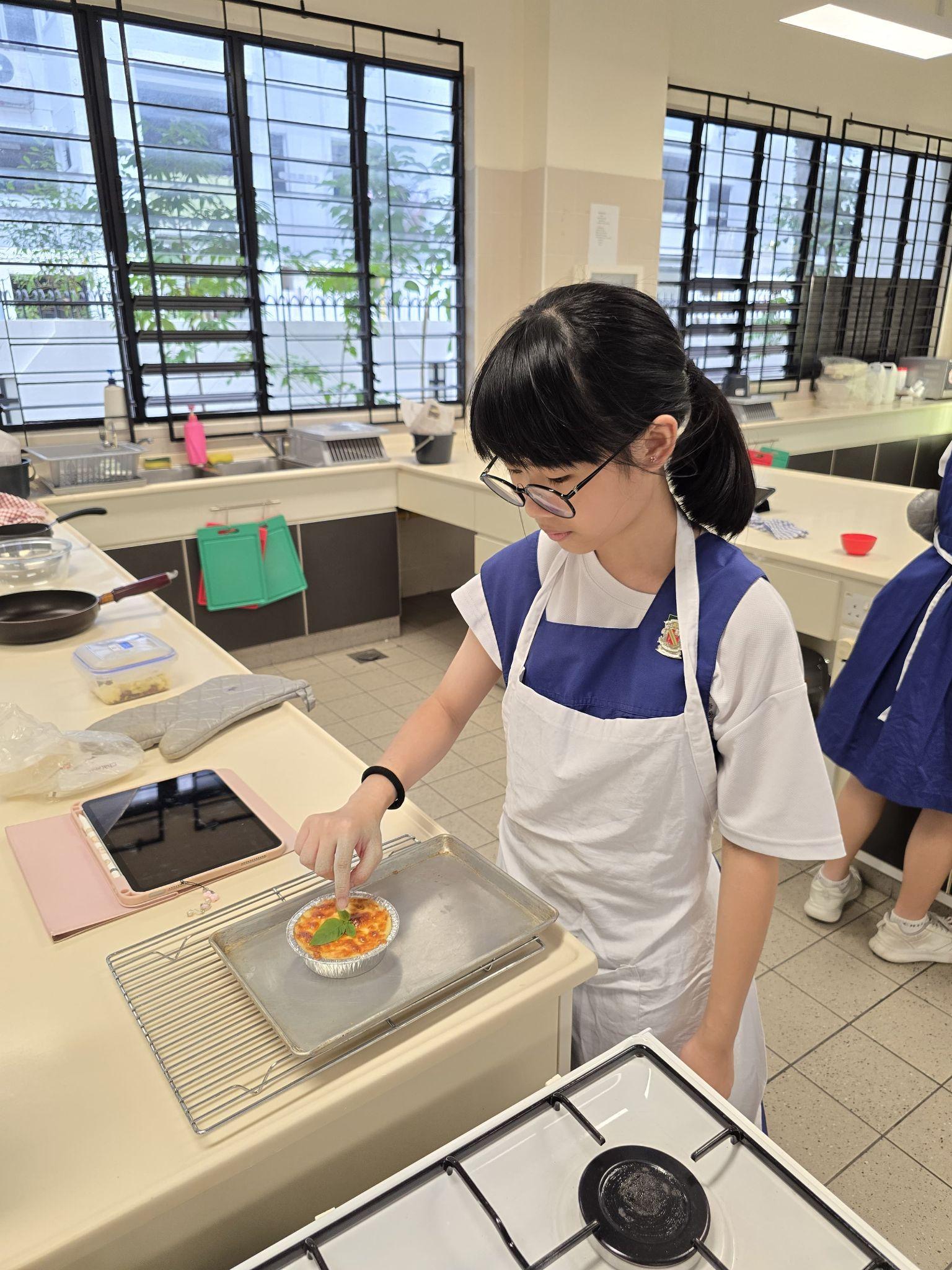
Farm to Table :garnishing their food product.
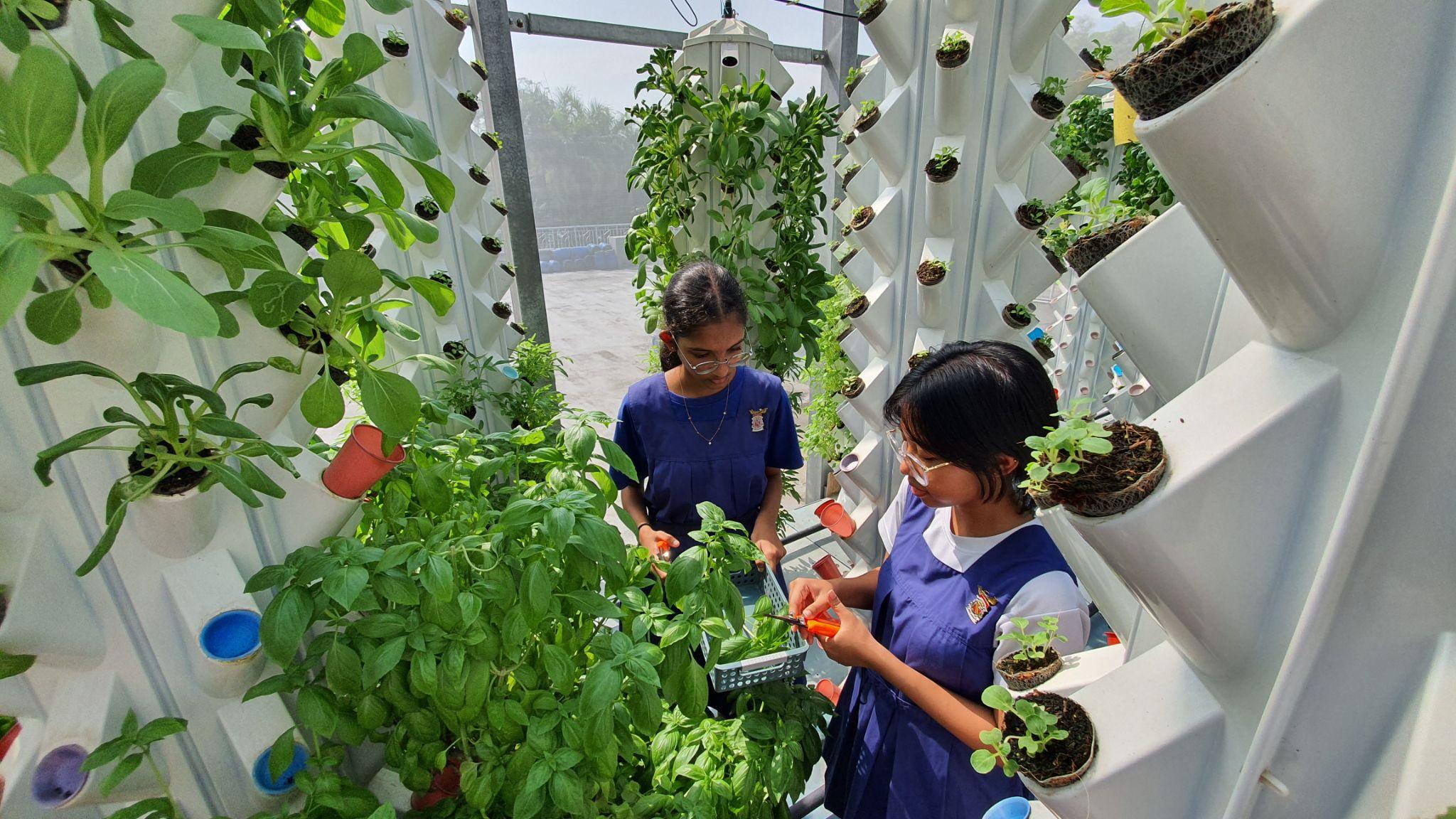
Upper Sec NFS students visiting a sustainable urban farm and harvesting basils to make their own Pesto.
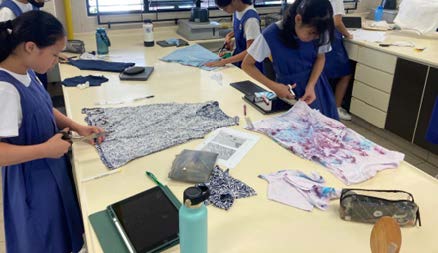
Lower Sec FCE students upcycling and repurposing their own T-shirts into reusable bags
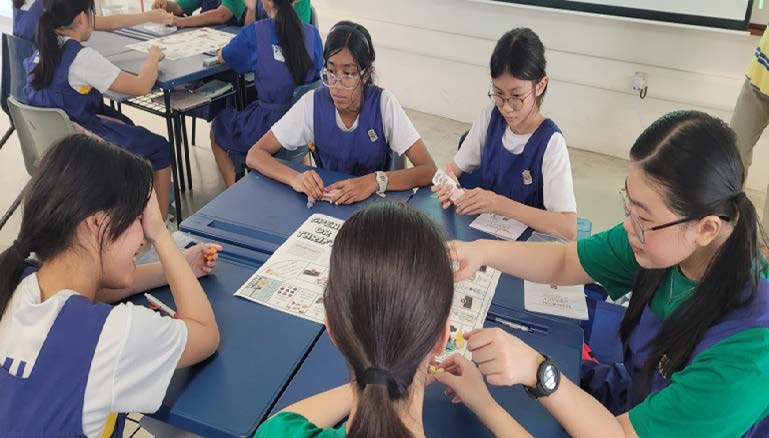
From board games to iPads, our girls learn to draw up budgets, compare prices and make wise spending choices in authentic contexts.
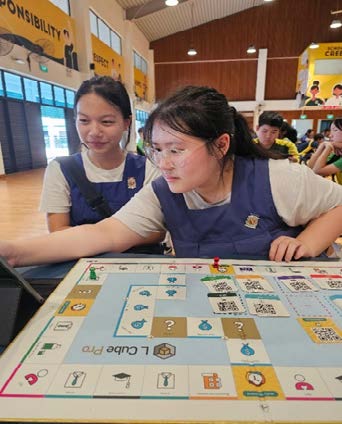
Putting three years of financial literacy learning into action at the National FinLit Competition.
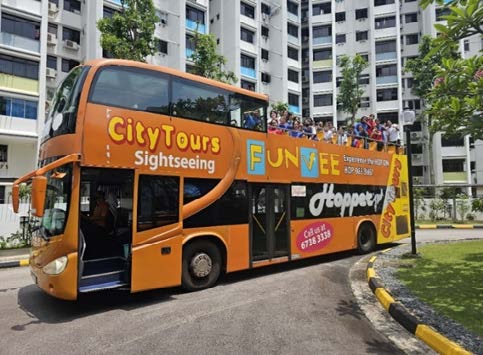
Big Bus Tour exploring Singapore’s vibrant attractions and ethnic quarters to learn how tourism powers our economy while soaking in the best views!
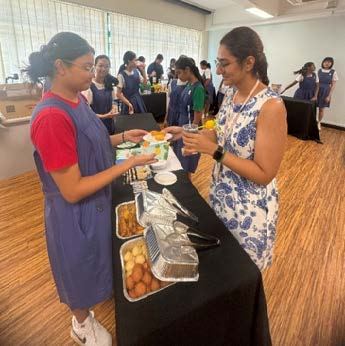
From theory to tray: our EBS girls apply marketing and customer service in this 20-hour hands-on hospitality ApLM
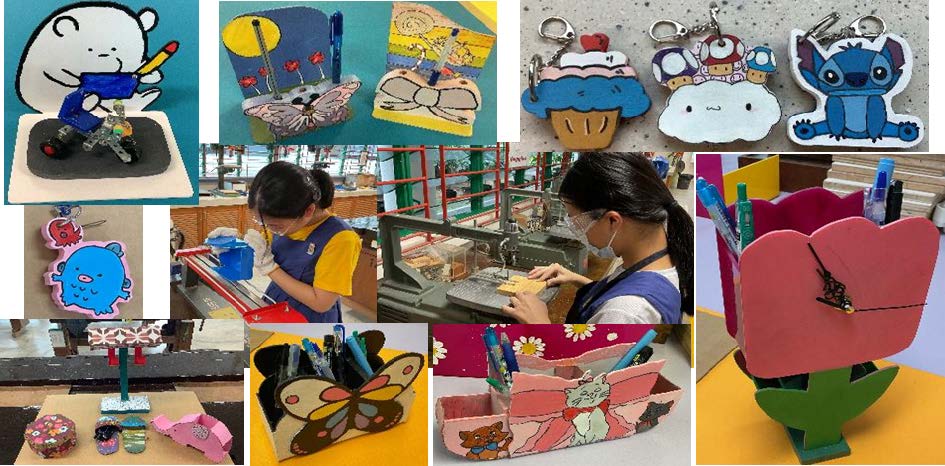
Lower Sec D&T projects using the Design Thinking methodology
Give a man a fish and you feed him for a day; teach a man to fish and you feed him for a lifetime.— Chinese Proverb
Achievements & Accolades
2024
Achievements info 2024
Nutrition and Food Science | Junior Chef Culinary Competition 2024 |
|---|---|
National Accounting Challenge 2024 | 3 Merit Award (Individual) 1 Finalist (Team) |
2025
Achievements info 2025
Nutri Quench Challenge by Pokka 2025 | 1 Finalist (Team) |
|---|---|
Principles of Accounts | 1 Finalist (Team) |
National FinLit Competition 2025 | 3 Finalists (Individual) |
Elements of Business Skills | 1 Finalist (Team) |