
Drama
Drama programme builds performance skills through making, presenting, and reflecting. Students collaborate to create original works and deepen their grasp of theatre and its cultural impact.
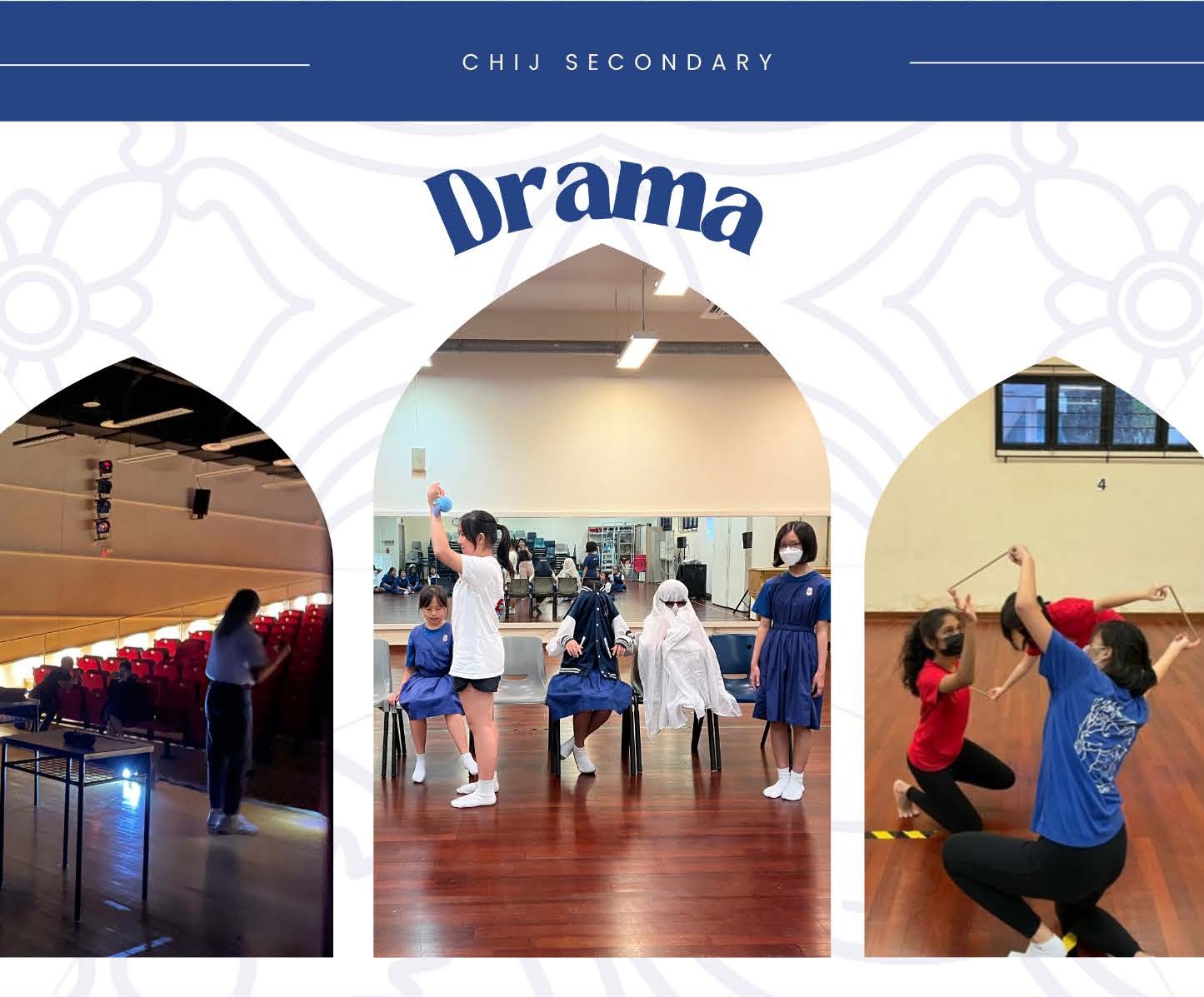
Drama is Life, Life is Drama
Student Outcomes
We envision our students to be:
Effective Communicators and Performers
Critical Thinkers
Culturally and Socially sensitive
Curriculum
Learning in drama requires an experiential mode of learning that involves active participation in the three domains - making, presenting and reflecting. These domains provide the framework for learning in drama. These are considered
inter-related, inter-dependent and equally important.
Making involves the active exploration of ideas through the application of the elements and conventions of drama. Students select and structure dramatic elements and conventions to create and shape dramatic action. They work in the forms of improvisation, role-play, story-telling, and playbuilding to create original works. In this domain, students learn to work with ideas, holding some and discarding others as they refine meaning, reframe and delay final judgement, thus leading to development of flexibility and creative thinking.
Presenting involves the development of expressive communication processes which may lead to performance. Students apply the elements and conventions of drama to a practical knowledge of dramatic forms and styles as they develop a range of performance skills. In this domain, students learn to value the processes of rehearsal and refinement as they work towards a shared goal.
Reflecting involves interpretation, critical analysis and evaluation of their own and others’ dramatic works. Students demonstrate their understanding of the application of elements and conventions to a range of dramatic forms and styles. In this domain, students learn to use the vocabulary of drama to communicate in written and oral forms.
Signature Programme
The Lower Secondary Drama programme, an integral part of our common curriculum, aims to deepen students’ understanding of cultural and social constructs via activity-based collaborative learning. Students attend this programme in Secondary 1 and 2 with classmates in their form classes. Every lesson is an opportunity for students to hone their communication skills and think critically about the issue or task at hand. At the end of each weekly lesson, students showcase their learning with a short performance, drawing on their personal experiences, observations, and interpretation of the stimulus provided.
Our Students
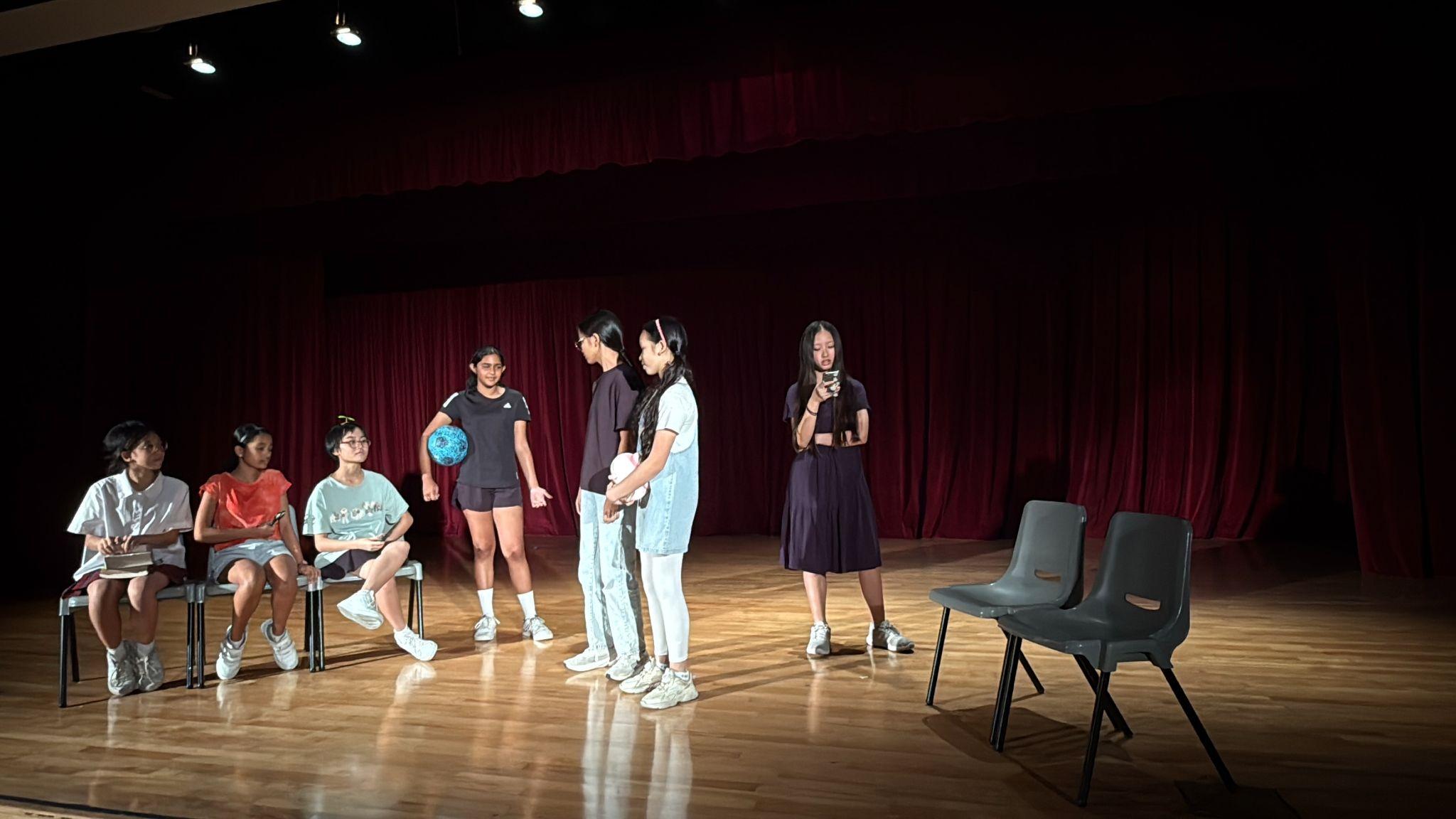
Drama Nite 2025
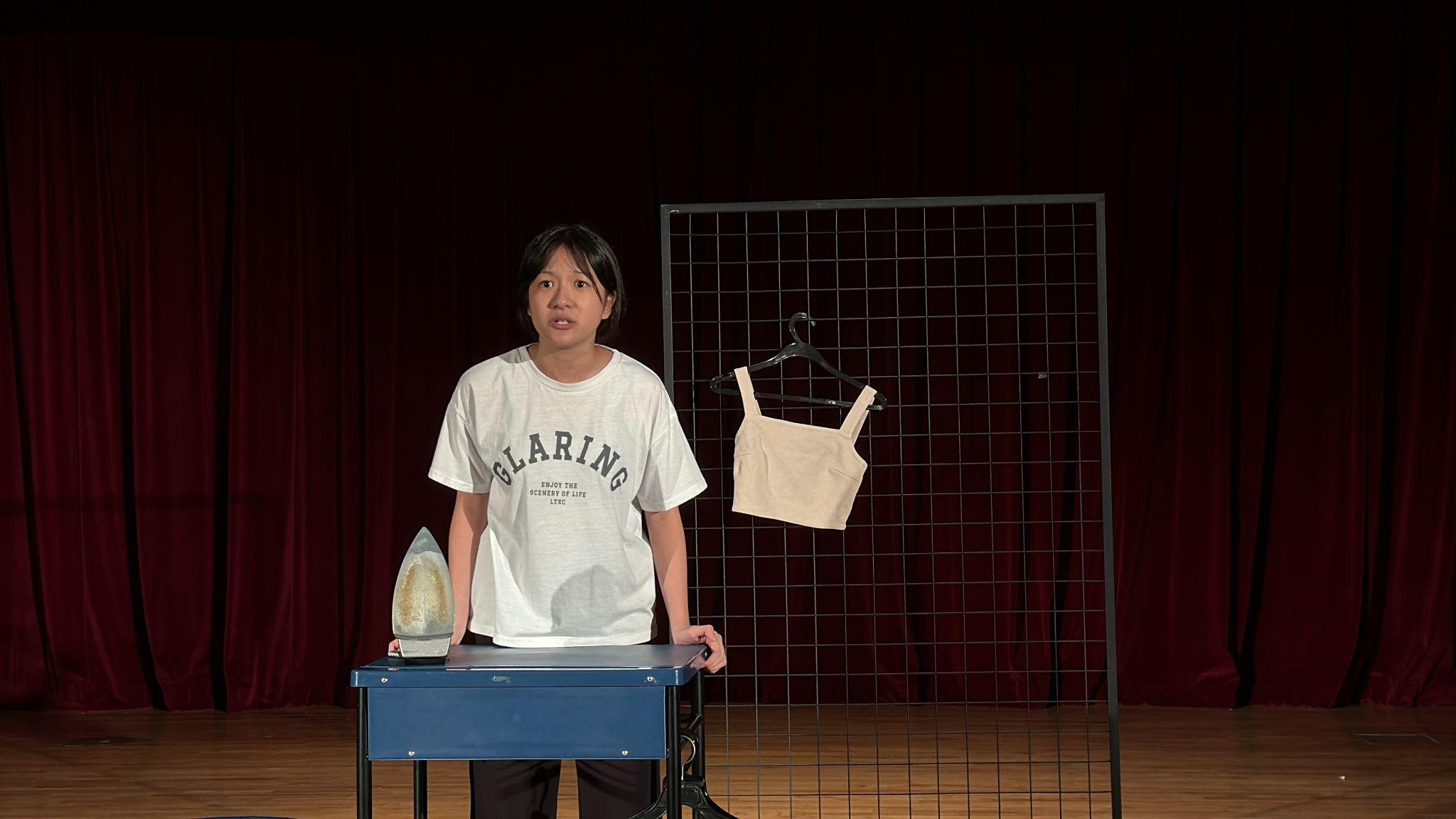
Drama Nite 2025
“The stage is not merely the meeting place of all the arts, but is also the return of art to life.”— Oscar Wilde (Playwright and poet)